
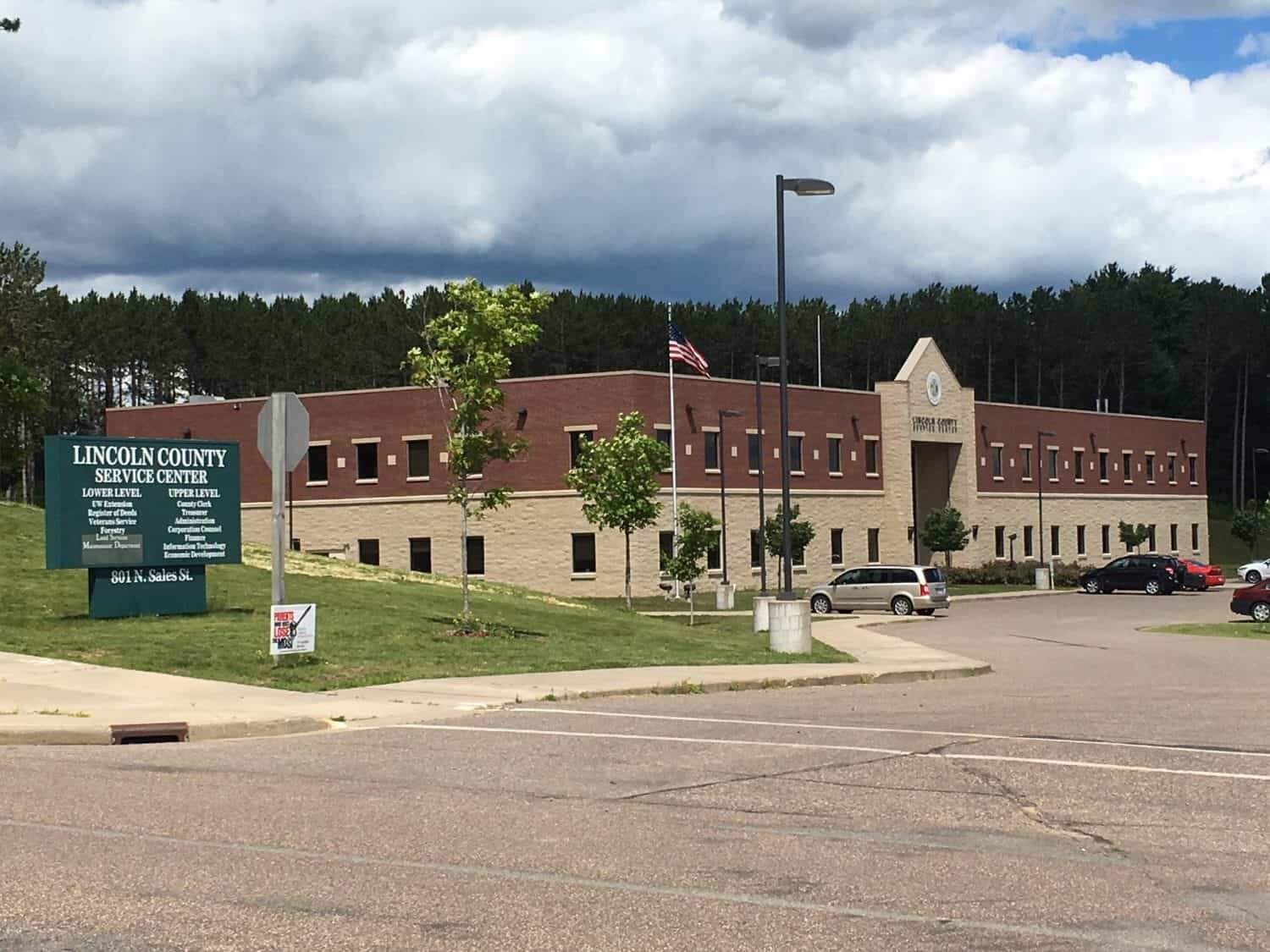
LINCOLN COUNTY – Lincoln County is seeking grant funds aimed at maintaining the county’s waterbodies.
During its meeting at the Lincoln County Service Center in Merrill last month, the Lincoln County Board of Supervisors approved seven resolutions related to the health of the county’s 700-plus lakes and 650-plus miles of rivers and streams.
LMPN, CBCW grants
Several of the approved resolutions will allow the county to seek funding for its Lake Monitoring and Protection Network (LMPN) and Clean Boats, Clean Waters (CBCW) initiatives, which aim to combat aquatic invasives species (AIS) in county waters.
Grant funding for the programs is administered by the Wisconsin Department of Natural Resources (DNR).
According to a county board action report from Lincoln County Conservation Program Manager Tom Boisvert, the LMPN grant program utilizes a resource-based allocation model that allows all 72 Wisconsin counties to receive a base allocation. Under this distribution model, Lincoln County would be eligible to receive up to $16,224.09 for AIS-related work.
No matching funds are required to receive the grant, and it is non-competitive, the report said.
In a separate report, Boisvert explained that CBCW is an AIS prevention program through which volunteer or paid staff conduct watercraft inspections and educate boaters on how to prevent the spread of AIS at boat landings. CBCW grants assist with conducting the programs.
Lincoln County currently offers CBCW services, with the help of grant funding. For 2026, the county will seek to provide CBCW services at five boat landings – two on Lake Mohawksin, two on the Spirit Reservoir and one on Lake Nokomis. The total cost would be $16,000.00.
CBCW grants require a 25% match from the grantee. The Lake Nokomis Lake District, Friends of Lake Mohawksin and the Spirit Reservoir Association have committed to donating a combined total of $4,000.00 to cover the match requirement. The DNR would provide the remaining $12,000.00, according to the report.
Surface Water Planning Grant
Lincoln County will also seek funding to learn more about the county’s trout streams.
According to a report from Boisvert, one of the most important habitat improvements on trout streams in the Northern Lakes and Forests region is restoring stream connectivity. Boisvert explained that many northern stream reaches do not contain the entirety of the necessary habitat for all life stages of trout, meaning seasonal migration is key in maintaining healthy trout populations.
“For example, adults often migrate to small tributaries to spawn, and then migrate to larger downstream locations to overwinter,” Boisvert said. “To improve migration, the primary technique is (the) replacement of culverts with ones that are adequately sized and set at a proper depth. Improperly placed culverts can be perched or set incorrectly, leading to velocity barriers, water depth issues or ponding issues that impede fish passage.”
The Lincoln County Land Services Department has been conducting assessments of culvert crossings in the county. Boisvert explained that assessing all of the county’s culvert crossings would require a three-phase approach.
According to the report, a total of 244 culvert crossings within the Towns of Birch, Harrison, King, Merrill, Pine River, Russell, Schley and Skanawan will have been evaluated by the end of the year, which would conclude the project’s first phase.
A DNR Surface Water Planning grant would allow the county to complete phases two and three of the project.
Phase two would involve assessing 150 culvert crossings in the Towns of Bradley, Rock Falls, Scott, Somo and Wilson, as well as 12 crossings in the Cities of Tomahawk and Merrill.
In phase three, 167 crossings in the Towns of Corning, Harding and Tomahawk would be assessed.
The results of the assessments would be shared with municipalities and the Lincoln County Highway Department. According to Boisvert, the project would “provide tools to responsible municipalities so they can build more resilient and environmentally-friendly stream crossings.”
“Project results may lead to future cost-sharing opportunities for replacing and/or repairing high-priority culverts,” Boisvert noted.
The grant is a 67% cost-share grant requiring 33% in matching funds from the applicant. Specific amounts of funding available or being sought were not provided in the report or the resolution.
If the county is unsuccessful in its grant application, the project will not be completed, according to the resolution.
In relation to the culvert crossing evaluations, the board approved a resolution accepting a $2,000.00 donation from the Wisconsin River Valley Chapter of Trout Unlimited. The funds will be allocated to the assessment project.
Surface Water Restoration grant
A DNR grant would help two county departments in sustaining stream crossings.
In a report, Boisvert explained that the county’s Forestry, Land and Parks Department and Highway Department are tasked with maintaining extensive roadway systems with abundant stream crossings.
“Both of these departments improve stream crossing structures as needed, but are often hindered by the costs of construction,” Boisvert said.
DNR Surface Water Restoration grant funding would support a pair of planned projects.
A culvert replacement on Papoose Creek, a Class 2 trout stream, is slated for next year, following the failure of the existing crossing. The project is on a logging road in the Lincoln County Forest.
Construction on a “culvert-type structure” on County Rd. D is also planned for 2026. The project will involve replacing a crossing over Pine Creek, a Class 1 trout stream. Boisvert said the existing bridge is showing signs of deterioration.
Healthy Lakes and Rivers grant
Lincoln County is also seeking grant funding aimed at improving shoreline and fish habitat on Lake Alice.
In a report, Boisvert explained that the DNR’s Healthy Lakes and Rivers (HLR) grant program promotes shoreland best management practices, for which riparian landowners can receive incentive payments to implement.
“The program includes five simple and inexpensive practices that improve habitat and water quality on shoreland property,” Boisvert stated.
Sponsoring organizations, such as local units of government, qualified lake and river organizations and nonprofits, can apply for HLR grant funding to assist landowners in installing these practices.
Boisvert said several landowners on Lake Alice expressed interest in participating in the HLR program. Lincoln County is able to seek grant funding to assist the landowners in implementing projects.
The landowners are looking to implement the “fish stick” best practice, which, Boisvert explained, are large, woody habitat structures that utilize whole trees grouped together. The structures are anchored to the shore and are partially or fully submerged.
“Fish sticks are not tree drops, since the trees utilized for the projects come from further than 35 feet from shore,” Boisvert explained. “Thus, they don’t ‘rob from the bank’ of trees that may otherwise grow and fall in naturally.”
Boisvert said the primary results of the project would include several hundred feet of shoreline protected from erosion and a large increase of near-shore fish habitat.


Comments
No comments on this item Please log in to comment by clicking here