
WISCONSIN – Following the conclusion of the 2025 deer hunting seasons, the Wisconsin Department of Natural Resources (DNR) last week shared a summary of the year’s chronic wasting disease (CWD) sampling efforts.
“CWD is a fatal, infectious nervous system disease belonging to the family of transmissible spongiform encephalopathies (TSEs) or prion diseases,” the DNR said. “It occurs only in members of the cervid or deer family, which includes deer, moose, elk and reindeer/caribou.”
The DNR began monitoring the state's wild white-tailed deer population for CWD in 1999. The first positives were found in 2002.
According to a release from the DNR, for the 2025 season, the DNR focused its efforts on increasing sample collection in designated 2025 Fall Priority Areas.
Prior to the hunting season, the 2025 priority areas were chosen by reviewing the CWD sampling data and determining areas where additional samples and information were most needed. The DNR said these were areas where the disease was most recently discovered in wild and farm-raised deer in portions of central and northern Wisconsin.
“As in past years, testing was available statewide, but the additional samples tested from this year's priority areas will help the DNR better understand disease levels and distribution in areas where the disease was most recently discovered,” the DNR said.
Across Wisconsin, a total of 242 CWD sampling locations were available to hunters, including 163 self-sampling kiosks and 46 staffed sites. Six of the kiosks were managed through the Adopt-a-Kiosk program.
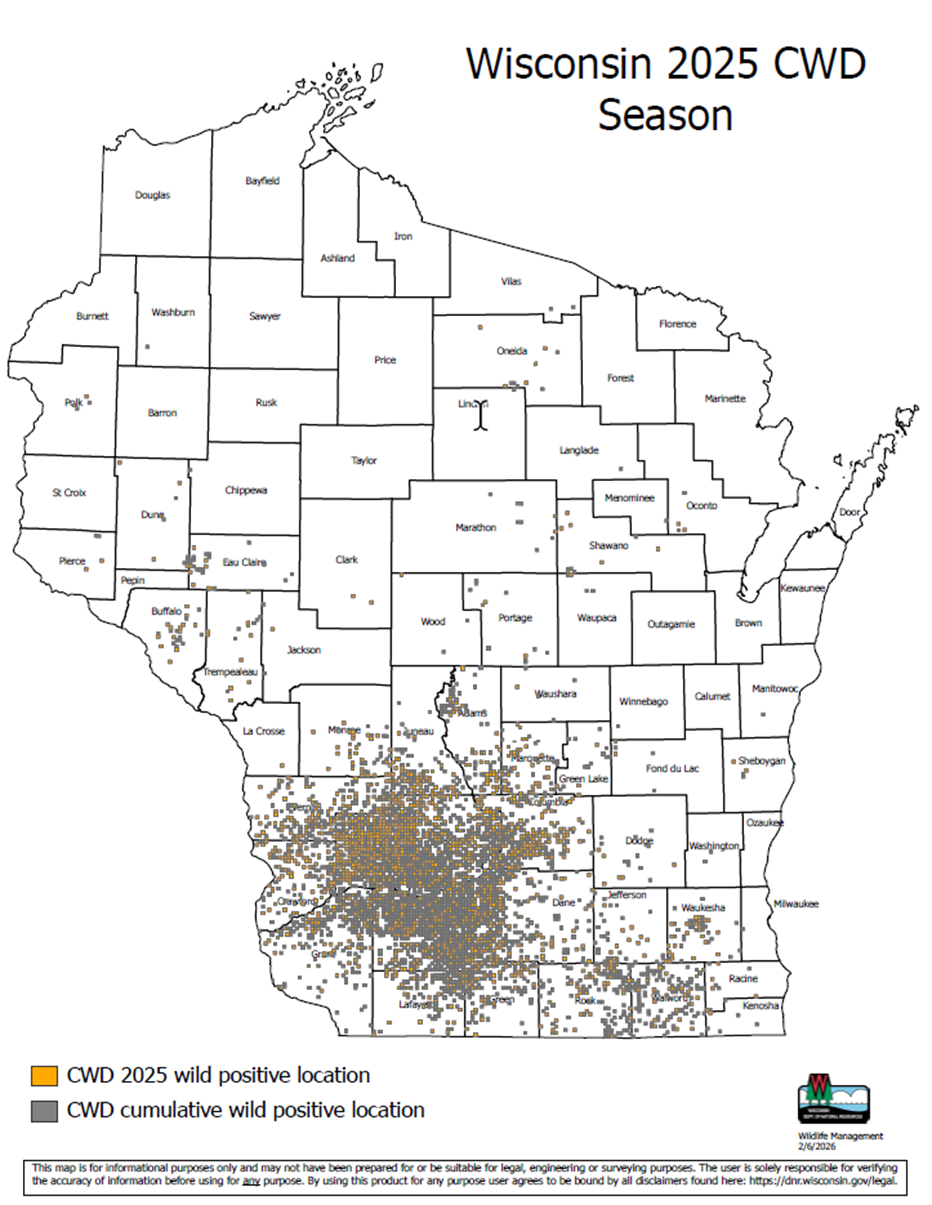
In total, 17,759 deer were sampled throughout the state during the 2025 hunting seasons with 2,006 samples testing positive. Most (87%) of these detections were in the Southern Farmland Zone.
A full breakdown of sampled and positive totals by zone and full CWD year (April 1-March 31) is available on the DNR’s Summary of CWD Statewide Surveillance webpage.
Results by county are also available on the DNR’s CWD Deer Testing Results by County webpage.
In Lincoln County, 152 wild deer harvested in 2025 were sampled and analyzed. None of the deer tested positive for CWD, according to DNR data.
Oneida County saw 437 deer tested, with five coming back positive for CWD, bringing the total in the county up to 13. One of the five new positives was in the northwestern part of the county, far removed from past detections, according to the release.
None of the 42 deer tested in Price County were positive for CWD.
Taylor and Vilas counties saw 45 deer and 220 deer sampled and analyzed, respectively. No deer in either county tested positive for CWD.
Additional details can be found on the CWD Interactive Map and CWD Results webpage, which includes summaries by county and township.
The DNR said the average number of days statewide from when a sample was dropped off at a sampling location to when the CWD result was emailed to the hunter and available online was 8.9 days. The diagnostic tests are completed at the Wisconsin Veterinary Diagnostic Laboratory.
In addition to sampling resources, 127 deer carcass waste disposal dumpsters were available to offer an option for hunters to dispose of their deer carcass waste during the 2025 deer season. Partnerships with 60 different organizations or individuals through the Adopt-a-Dumpster program helped to manage 67 of those dumpsters.
“The DNR sincerely thanks all the hunters who submitted a sample for CWD, the business owners who managed a CWD sampling site, those who participated in the Adopt-a-Kiosk and Adopt-a-Dumpster partnerships and those who submitted a donation in support of a dumpster this year,” the DNR stated.
“CWD remains a complex issue with no single solution for managing the disease,” said Erin Larson, DNR Deer Herd Health Specialist. “However, the department remains committed to continuing CWD efforts, including providing services to hunters and creating partnerships with the people of Wisconsin to work towards the common goal of a healthy deer herd and outstanding hunting opportunities in our state.”
“The DNR reminds the public that there have been no reported cases of CWD infection in humans to date,” the DNR stated. “However, public health organizations recommend against consuming meat from deer that test positive for CWD and encourage testing deer prior to consumption, especially in areas prevalent with CWD.”




Comments
No comments on this item Please log in to comment by clicking here